
The cheapest way to describe Morpheus8 is microneedling with radiofrequency added. Clinics use that line constantly, and it plants an assumption that follows most people all the way into the consultation room: that this is ordinary microneedling, only deeper, stronger and dearer. It is not. The two sit in different regulatory categories under different product codes, reach different layers of tissue, carry different risk profiles, and fall into different tiers under both of the licensing schemes the UK has proposed. On the one indication where both have something concrete to point at, the paperwork runs the opposite way to what the price suggests.
The two treatments side by side
Most microneedling figures below come from SkinPen, the first device authorised in that category and the one with published detail on file.
| Plain microneedling | Morpheus8 | |
|---|---|---|
| Mechanism | Needles puncture skin mechanically, triggering a wound-healing response. No heat | The same mechanical injury, plus bipolar radiofrequency at 1 MHz discharged from insulated needle tips, coagulating tissue |
| FDA device class | 21 CFR 878.4430, microneedling device for aesthetic use, product code QAI | 21 CFR 878.4400, electrosurgical cutting and coagulation device, product code GEI |
| Depth | 2.5 mm maximum setting, safety and effectiveness not evaluated above 1.5 mm | 4.0 mm in the FDA clearance summary, 1 to 7 mm in the manufacturer’s manual, plus about 1 mm of thermal effect |
| Tissue reached | Epidermis and upper dermis | Dermis and subcutaneous fat at depths beyond 4 mm |
| Cleared cosmetic indication | Improving the appearance of facial acne scars in adults aged 22 and over, plus neck wrinkles under a later clearance | None. Electrocoagulation, haemostasis, and coagulation or contraction of soft tissue |
| How that clearance was granted | De Novo, with clinical study data submitted | Special 510(k), with clinical performance data recorded as not applicable |
| Downtime | 2 to 7 days per the American Society for Dermatologic Surgery | 2 to 5 days in published protocol; the manufacturer’s manual describes oedema and crusting over 1 to 3 weeks |
| Anaesthesia | Topical anaesthetic typical | Topical 23 percent lidocaine with 7 percent tetracaine for 1 to 2 hours |
| Typical UK price | Roughly £145 to £300 a session | Roughly £200 to £1,800 a session |
| Proposed England tier | Green, the lowest risk band | Amber, named explicitly as a hybrid radiofrequency and microneedling device |
| Proposed Scotland group | Group 1 at 1.5 mm or less | Group 3, healthcare professionals only, above 1.5 mm or under anaesthetic |
| In the FDA 2025 radiofrequency safety communication | No | Yes |
They are not the same category of device
Two product codes, two regulations, two different things being regulated. QAI covers a microneedling device for aesthetic use. GEI covers electrosurgical cutting and coagulation, which describes a machine whose job is to burn tissue in a controlled way.
That distinction is not pedantry. It determines what evidence the manufacturer had to produce, what the device may legally be marketed for, and which proposed UK licensing tier it lands in. It also explains why the regulator issued a safety communication about one modality and not the other.
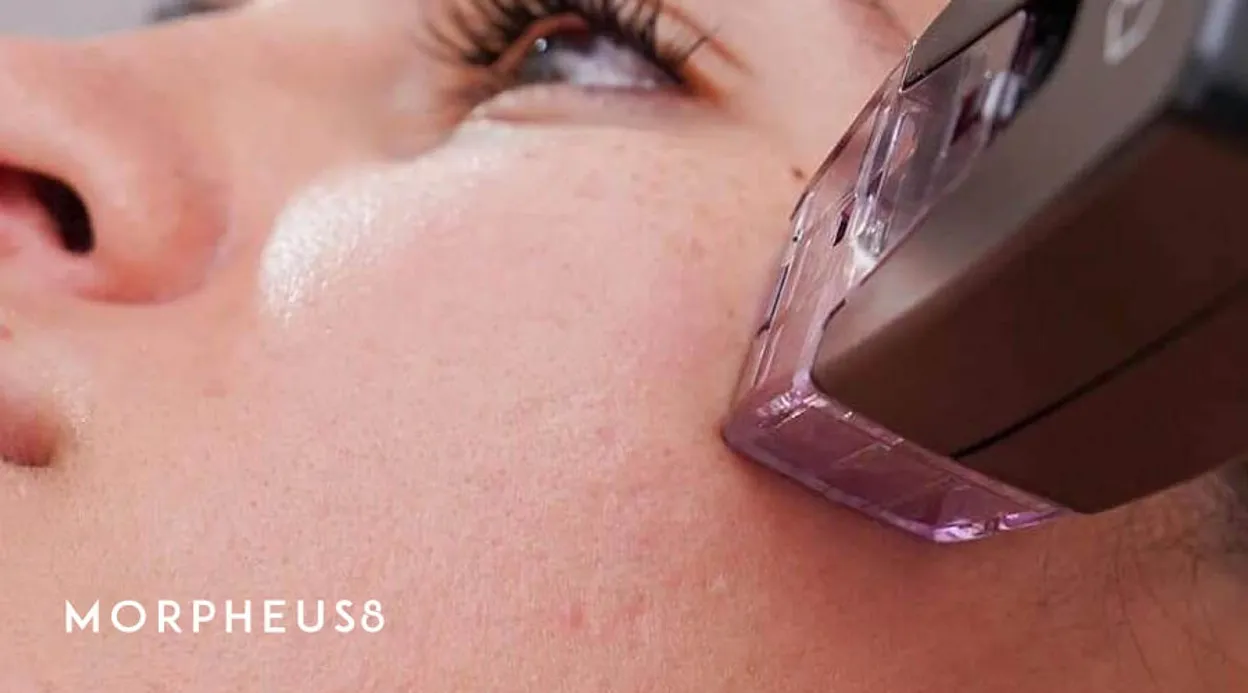
For acne scars, the simpler treatment has the better paperwork
This is the part most comparison pages get backwards.
The SkinPen system was authorised through the De Novo pathway, which creates a new device category rather than piggybacking on an existing one, and its indication is specific: improving the appearance of facial acne scars in adults aged 22 years or older. Clinical study data were submitted in support of it. The FDA now describes the microneedling category as authorised to improve the appearance of facial acne scars, facial wrinkles and abdominal scars in patients aged 22 and over.
Morpheus8 has no cosmetic indication of any kind. It has never been FDA approved: it is 510(k) cleared, a substantial-equivalence pathway which establishes that a device resembles one already on the market, not that it works. The current cleared wording covers dermatologic procedures where coagulation or contraction of soft tissue, or haemostasis, is needed. Nothing in any Morpheus8 clearance names wrinkles, acne scars, skin tightening, cellulite, stretch marks or fat reduction. That clearance was granted as a Special 510(k) with clinical performance data recorded as not applicable, meaning bench data only.
The published evidence points the same way. A systematic review and meta-analysis of 12 randomised trials covering 414 patients found a statistically significant objective improvement in acne scarring for microneedling without radiofrequency, with a modest mean difference of 0.42, and no significant effect for fractional radiofrequency microneedling. An earlier systematic review of 33 articles found improvement in scar appearance in every one of them.
None of this means Morpheus8 does nothing for scarring. It means the confident claim runs the opposite way to the price, and a clinic quoting four figures for scar work owes you a reason. Where the device does and does not have a case is set out in what we can and cannot say about Morpheus8 for acne scars.
What the radiofrequency actually adds
Depth, and essentially only depth. That is not a small thing.
Plain microneedling works in the epidermis and the upper dermis. The SkinPen maximum setting is 2.5 mm, but its safety and effectiveness were never evaluated above 1.5 mm, and the clinical study that supported the acne scar indication used 1.5 mm as its ceiling. Morpheus8’s manufacturer manual offers 1 to 7 mm, with roughly a further millimetre of thermal effect beyond where the needle physically stops. Above about 4 mm it is no longer treating skin at all: it is heating subcutaneous fat.
That is the entire technical case for the device, and it is a legitimate one. It is why Morpheus8 is used on jowls, on laxity under the chin and on body areas, where a treatment confined to the upper dermis has nothing to reach. The mechanism, the insulation and the numbers behind it are worth understanding before anyone quotes you a setting, and it is fair to ask which depth they intend to use where.
Why only one of them appears in the FDA’s safety communication
On 15 October 2025 the FDA published a communication on the potential risks of certain uses of radiofrequency microneedling, reporting burns, scarring, fat loss, disfigurement, nerve damage and the need for surgical repair. Its flattest line is the one worth carrying out of this article: radiofrequency microneedling is a medical procedure, not a cosmetic treatment. The agency states that its evaluation is ongoing and that these devices should not be used at home.
It covers radiofrequency devices. It does not cover mechanical microneedling, and the two should not be run together in either direction: mechanical microneedling is not risk free, and radiofrequency microneedling is not disqualified by a safety communication existing.
But notice why the line falls where it does. Heat at depth is not selective about what it coagulates. Below the dermis it finds fat, and coagulated fat does not reliably return. The millimetres that make the argument for Morpheus8 are the same millimetres that put it inside the safety communication while a 1.5 mm mechanical device stays outside.
The device’s strongest selling point and its distinctive harm are the same specification, read twice.
One more thing belongs here plainly. No sham-controlled randomised trial of Morpheus8 has been published. The independent systematic review that excluded industry-funded studies rates the radiofrequency microneedling evidence base at Level of Evidence 5, the weakest tier. Much of the branded literature, including the acne dataset, appears in journal supplements sponsored by the manufacturer and written by its consultants. That does not make the findings wrong. It does mean “multiple published studies” is a phrase worth unpacking.
The UK rules diverge too
No national licensing scheme is in force in England yet, but the proposals are drafted and they separate the two. Microneedling alone sits in the green tier, the lowest risk band. Hybrid devices combining two or more technologies, radiofrequency plus microneedling named explicitly, sit in amber, where a non-healthcare practitioner would need oversight by a named regulated healthcare professional.
Scotland has gone further. Its proposed Group 1 covers microneedling to a depth of 1.5 mm and radiofrequency treatments under local authority premises licensing. Group 3, restricted to doctors, dentists, prescribing nurses and prescribing pharmacists, covers needling beyond 1.5 mm and any listed procedure performed under anaesthetic. Morpheus8 routinely satisfies both conditions.
In the meantime the practical limit is the national occupational standard, which caps therapists at 0.5 to 1.0 mm on the face and 1.5 mm on the body and warns that deeper needling is considered medical use, beyond a therapist’s scope and likely to invalidate their insurance. Competing frameworks set the thresholds slightly differently. Morpheus8 depths sit outside all of them.
So which one
If facial acne scarring is the problem, the treatment with the specific cleared indication and the clinical data behind it is the plain one, and it costs a fraction as much. If the problem is laxity along the jaw or under the chin, or something on the body, plain microneedling is not reaching the tissue involved and no number of sessions will change that. Those are different questions, and a clinic that answers both with the same machine is selling equipment rather than assessing you. The same logic applies against the other radiofrequency microneedling devices on the UK market, where the differences are narrower but still real.
If what is bothering you is active acne, changing moles or scarring nobody has looked at, see your GP or a dermatologist before booking anything cosmetic. Otherwise, book a consultation with us and we will tell you which of these two, if either, suits what you actually want fixed, with the depths, the downtime and the evidence set out in plain terms.
At a glance
What the radiofrequency buys you, and what it costs you
+ Reasons in favour
- The depth is real and it is the whole argument. The manufacturer's manual offers 1 to 7 mm with roughly 1 mm of thermal effect beyond the needle tip, where the SkinPen microneedling study used a 1.5 mm maximum and safety and effectiveness were never evaluated above that
- It is the only one of the two that puts controlled heat into subcutaneous fat, which is why it is used on jowls, the area under the chin and the body rather than the face alone
- Because it heats rather than only punctures, it is a different modality and not a stronger version of the same one. Treating the two as interchangeable gets the choice wrong in both directions
− Reasons for caution
- For facial acne scars specifically the cheaper treatment holds the stronger regulatory position. The SkinPen indication was granted through De Novo with clinical study data submitted, while the Morpheus8 soft tissue clearance records clinical performance data as not applicable
- No Morpheus8 clearance names a cosmetic outcome at all, while microneedling devices are authorised for facial acne scars, facial wrinkles and abdominal scars in adults aged 22 and over
- Both downtime and cost run higher. Published protocol gives 2 to 5 days, the manufacturer's manual describes oedema and crusting over 1 to 3 weeks, and UK sessions run to roughly £1,800 at the top end
Frequently asked questions
The short version.
01Is Morpheus8 just microneedling with extra steps?
No, and the difference is not one of degree. Plain microneedling is purely mechanical: needles create controlled micro-injury and the body mounts a wound-healing response, with no heat involved at any stage. Morpheus8 does that and then discharges bipolar radiofrequency at 1 MHz from the insulated tip of each needle, coagulating tissue at whatever depth the tip has reached. The FDA does not regulate them as the same kind of product. Plain microneedling sits under 21 CFR 878.4430 as a microneedling device for aesthetic use, product code QAI. Morpheus8 sits under 21 CFR 878.4400 as an electrosurgical cutting and coagulation device, product code GEI.
02Which one is better for acne scars?
On regulatory evidence, plain microneedling. The SkinPen indication for improving the appearance of facial acne scars in adults aged 22 and over was granted through the De Novo pathway with clinical study data submitted. No Morpheus8 clearance names acne scars, and the soft tissue clearance it does hold was granted on bench data with clinical performance data recorded as not applicable. A meta-analysis of 12 randomised trials covering 414 patients found a statistically significant objective improvement in scarring for microneedling without radiofrequency, and no significant effect for fractional radiofrequency microneedling. That is not the same as saying Morpheus8 does nothing for scarring, but it is the opposite of what the price difference implies.
03Why is Morpheus8 so much more expensive?
Partly the capital cost of the platform and the consumable tips, partly who is legally comfortable operating it. UK sessions run roughly £200 to £1,800 depending on the area and the operator, against roughly £145 to £300 for a professional facial microneedling session. The price gap is not evidence of a proportionally better result, and no published trial has compared the two head to head on the same patients.
04Can a beauty therapist perform either treatment in the UK?
There is no national licensing scheme in force yet, so the practical limit today is the national occupational standard and the insurance that follows it. That standard limits therapists to 0.5 to 1.0 mm on the face and 1.5 mm on the body, and says deeper needling is considered for medical use and beyond the scope of the therapist. Morpheus8 routinely operates deeper than that and usually under anaesthetic. Under the proposed English scheme microneedling alone sits in the green tier and hybrid radiofrequency plus microneedling devices sit in amber. Under the proposed Scottish groups, needling beyond 1.5 mm or performed under anaesthetic falls into Group 3, restricted to healthcare professionals.
05Is plain microneedling the safer option?
It carries a narrower severe-risk profile, which is a more precise statement than calling it safe. The FDA safety communication of 15 October 2025 covers radiofrequency microneedling and reports burns, scarring, fat loss, disfigurement, nerve damage and the need for surgical repair. It does not cover mechanical microneedling, and those two facts should not be blurred together. Mechanical microneedling has its own risks, including post-inflammatory pigmentation and, with rollers, tram-track scarring. Any practitioner who tells you either treatment has no risks is not the practitioner you want.